


How Japanese Companies Wrap Up the Year: Evaluations, Greetings, and Holiday Operations
December marks one of the busiest stretches of the year inside Japanese companies, and while the streets turn festive, offices focus on closing out business before the long New Year break. It is a period defined by reviews, year-end greetings, client visits, and internal deadlines, with teams working to finish projects and stabilize operations before offices shut down.
These customs, some long-established and others more recently adapted, create a distinct rhythm inside workplaces during the final weeks of the year, and they give a clearer idea of why this period feels intense across many industries in Japan.
The Year-End Evaluation Cycle
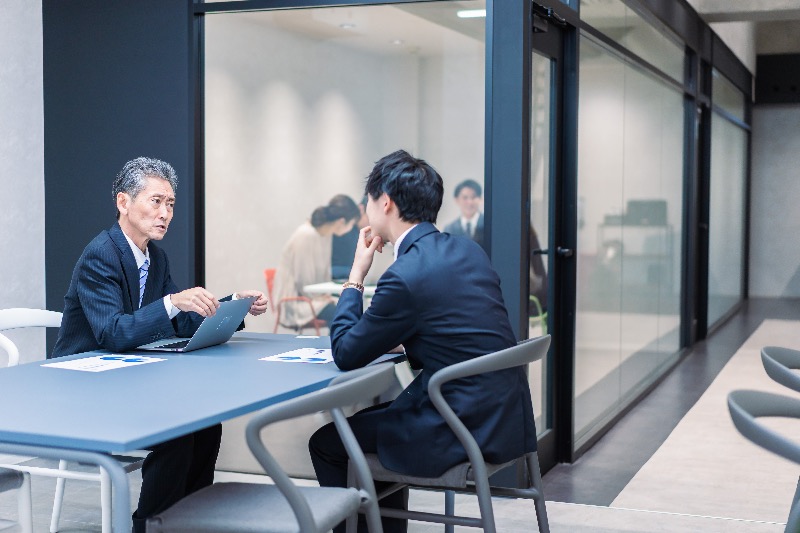
One major year-end task is the 人事評価 (jinji hyōka), or performance evaluation cycle. In Japan, many companies conduct formal employee evaluations in December, aligning with the winter bonus payout period. This is often the second big review of the year (after a mid-year summer review), closing out the fiscal or calendar year’s assessment.
The evaluations feed directly into decisions on salary raises (昇給, shōkyū), bonuses (賞与, shōyo), promotions, and sometimes contract renewals for the coming year. In fact, winter bonuses (typically paid in December) are commonly based on these year-end performance reviews.
Culturally, there’s an expectation that employees will prepare 自己評価 (jiko hyōka, self-evaluations) or end-of-year reports. Workers reflect on their annual achievements, challenges, and areas for improvement related to goals set earlier in the year. The evaluation process is structured, starting from setting goals at the beginning of the cycle (often April), moving to mid-year progress checks, and finally reaching the year-end assessment that shows how their work contributed to the team or department, followed by supervisors’ feedback.
Done right, this cycle is meant to be constructive; the aim is to foster talent development and give motivating feedback so that employees enter the new year with clarity on how to improve. Strong year-end evaluations can position an employee for an April pay rise or a spring promotion (since many companies’ new personnel moves take effect at the start of the business year). On the other hand, a weak evaluation might limit one’s bonus or even impact the renewal of one-year contracts for non-permanent staff.
For the company, completing these evaluations by December creates momentum for the next year. Managers use the results to identify high performers to reward and to pinpoint areas for training in the new year. It also helps companies with year-end budgets and staffing plans for the next cycle.
The year-end performance review, though stressful for some employees, reflects Japan’s preference to “settle scores” for the year; everyone learns where they stand as the year closes. In essence, Japanese firms treat December as a time of reckoning and realignment: performance is formally appraised, rewards and future roles are decided, and the whole organization prepares to start January with a fresh baseline.
Year-End Courtesy Visits
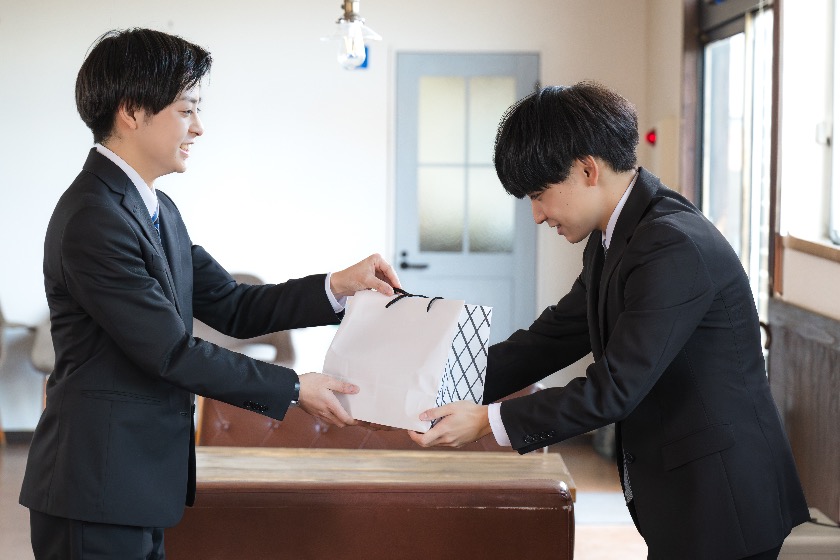
From mid-December until the final working day, many Japanese companies carry out 挨拶回り (aisatsu-mawari), a round of courtesy visits to clients, partners, and suppliers before the year closes. These are not sales meetings; their purpose is to express gratitude for the year’s cooperation, acknowledge shared projects, and signal continued commitment going into the new business year. Even a brief visit carries weight, since maintaining long-term, trust-based relationships is a core expectation in Japanese business culture.
A typical visit is short (around 10–15 minutes) and formal: a simple greeting, a few words of thanks, and sometimes the exchange of a token gift (手土産, temiyage), like a box of sweets or a company calendar. Consumable items (お菓子 or beverages) are preferred so they can be shared with the office staff. Depending on the size and longevity of a company, some firms order batches of calendars or branded gifts each year specifically to hand out during year-end courtesy visits.
The way aisatsu-mawari is practiced has evolved as work styles change; in the past, it was more formal and extensive: sales teams would visit nearly every client with piles of gifts or calendars and spend more time at each stop. Nowadays, many companies prioritize efficiency; they might limit in-person visits to key accounts or use quick drop-ins rather than extended formal meetings, and send season’s greetings by email, video calls, or cards to others.
Still, companies remain flexible and choose the method the client would prefer: an in-person visit for those who appreciate face-to-face thanks (especially older clients), versus a courteous email for those who do not pay much attention to dated traditions.
Even as many visits have become shorter or more selective, the underlying sentiment endures. Companies use aisatsu-mawari to ensure that partners know their business was valued this year, and to set a positive tone for relations in the year ahead. And whether done face-to-face or via a heartfelt email, the message is the same: gratitude for the past year’s cooperation and a reaffirmed hope for ongoing partnership.
New Year Greeting Cards in the Workplace
Another symbol of the season is the sending of 年賀状 (nengajō), New Year’s greeting cards. In Japan, it is a very old tradition to exchange postcards marked with New Year’s Day greetings, and businesses have their own twist on this custom. The origin of nengajō dates back centuries; as early as the Heian period (794–1185), aristocrats would write New Year’s letters. In-person New Year visits (年始回り, nenshi-mawari) were common for those nearby, but for distant contacts, a written greeting was used.
This evolved over time with the advent of a modern postal system, and by the late 19th century (Meiji era), official New Year’s postcards were introduced, and it became a nationwide practice to mail greetings so they arrive on January 1. The cultural meaning remains: New Year’s cards are essentially a stand-in for the first personal visit of the year, meant to convey respect, gratitude, and good wishes to those who supported you, and to maintain connections with people you might not see often.
Business Etiquette
In the corporate context, ビジネス年賀状 (business nengajō) are typically sent from companies to clients, key contacts, and other partners. These business New Year cards tend to be more formal in tone and purpose than personal ones. They often feature the company’s name or logo and follow a concise and respectful format expressing appreciation for the past year’s patronage and conveying hopes for continued good relations in the new year. Unlike family or friend nengajō, which might include personal photos or jokes, business nengajō stick to conservative designs, often the year’s zodiac animal motif or traditional symbols of good luck.
Although both 挨拶回り (aisatsu-mawari) and ビジネス年賀状 serve to maintain professional ties, they function differently and are not interchangeable. 挨拶回り involves direct contact at the end of the year and signals appreciation for the current year’s cooperation, while nengajō is a formal greeting sent at the start of January to express hopes for continued partnership in the new year. Even if companies switch their year-end visits to digital formats, they generally still send New Year cards because each custom marks a different moment in the annual business cycle and carries its own etiquette.
Fewer Cards, More Digital Greetings
However, this long-standing custom has been declining in recent years, especially in physical form. The volume of New Year’s cards exchanged in Japan has dropped dramatically mostly due to digital communication trends. Japan Post statistics show that the number of New Year postcards issued peaked in 2004 at about 4.45 billion cards. Since then, it has fallen steadily; for 2026, only around 750 million New Year’s cards were printed.
The main reason is the rise of email, SNS, and other digital messaging; more people (especially younger generations) now send New Year greetings electronically. The cost of postage (recently increased from ¥63 to ¥85 per card) and environmental considerations have also accelerated this trend. Many individuals and companies have begun issuing 年賀状じまい statements, announcements that they will cease sending physical New Year cards after a certain year, to kindly end the exchange cycle.
Within businesses, there is a notable move to discontinue or digitize the New Year card practice. According to a 2024 survey, over half of Japanese companies have already stopped or decided to stop sending nengajō to business partners. Including those who were planning to end it by this year, only 34.4 % of companies were planning to send New Year cards for the 2025 New Year season (the remainder had either never done it, already quit, or set an end date).
The reasons companies cite are practicality and cost: printing and mailing hundreds or thousands of cards is time-consuming and expensive, as well as the sense that a formal card may not be preferred by some clients in the digital age. Instead, many firms now send デジタル年賀状 (digital nengajō), emails, or even New Year’s greetings on their corporate website and social media.
Even so, the underlying intention remains the same: opening the year with courtesy, reaffirming relationships, and maintaining the sense of formality that characterizes Japanese business culture.

Peak Domestic Travel Season
The New Year holiday period (年末年始休暇, nenmatsu-nenshi kyūka) is the busiest travel season in Japan and directly affects how companies plan their December workload. For many employees, this is the longest continuous break of the year, often lasting five to nine days as offices typically close from around December 28 or 29 until January 3 or 4. This shutdown becomes the main opportunity to visit family, take domestic trips, or simply rest, creating the nationwide 帰省ラッシュ (kisei rush) of people leaving major cities.
With so many travelers on the move, transportation systems experience their highest congestion of the year. JTB Corporation reported 28.52 million domestic trips during the 2024–25 year-end period (December 23–January 3). JR companies noted that in the 10-day window from December 27 to January 5, Shinkansen passenger numbers reached about 4.12 million, and limited-express services added another 195,000 passengers.
Outbound Shinkansen trains on December 29–30 regularly hit near full capacity, with non-reserved cars often exceeding 100 percent occupancy. Major airports such as Narita and Haneda also see sharp spikes; for example, in 2024, Narita expected over 51,000 departures on December 28 alone.
Highways experience similar pressure, especially on routes connecting cities with regional hometowns. A few days later, the pattern reverses with the Uターンラッシュ (“U-turn rush”), the mass return to urban centers around January 3 or 4, bringing another wave of full trains and heavy road traffic.
What this means for workplaces is that many employees are off duty and possibly traveling far during this time. It is customary for companies to grant about 5 to 7 consecutive days off around New Year’s, and in some years, if the calendar is favorable, it can stretch to 9- or 10-days including weekends.
This is often the one chance for workers to take an extended vacation, since apart from Golden Week in May or the Obon festival in August, Japanese holidays are usually shorter. As a result, it is widely understood across Japan that business activities slow significantly during 三が日 (san ga nichi, the first three days of January).

Operational Shutdowns and System Freeze Periods
Another distinctive part of Japan’s year-end work cycle is the 年末年始システム停止期間 (nenmatsu-nenshi shisutemu teishikikan), the planned system freeze that runs from the final days of December into the first business days of January. During this period, companies suspend large-scale deployments, updates, and major IT operations.
Industries that rely heavily on digital infrastructure, such as finance, e-commerce, logistics, telecommunications, and public services, commonly implement these freezes. The reason is practical: with offices closed and staffing reduced, even a small system error could become difficult to manage, so firms prioritize stability until work resumes in January.
For some services, the holiday period also becomes an ideal window for essential maintenance. When usage drops because most people are traveling or spending time offline, companies schedule upgrades, backups, or downtime that would be disruptive under normal business conditions. In customer-facing sectors, holiday closures are clearly announced ahead of time so that users know to expect delays or temporary disruptions.
It's also worth noting that Japanese banks are legally closed from December 31 to January 3, and the interbank clearing system pauses entirely during these days. Any domestic or international transfer made after the year-end cutoff is held until operations restart, meaning money sent on December 31 may not settle until January 4 or 5.
Internally, IT teams enter a stability-focused mode; development work slows, only critical fixes proceed, and key systems like databases, payment processors, reservation tools, internal management software are placed under restrictions. Because of this, companies emphasize completing major tasks well before December ends, which contributes to the intense workload of early and mid-December.
New feature launches, campaigns, or integrations are almost always postponed until after the New Year. By coordinating change freezes and scheduling unavoidable maintenance during the holiday lull, companies aim to begin January with stable systems and without preventable incidents at a time when work ramps up again across Japan.

As the Year Turns

The final weeks of the year place specific expectations on Japanese companies and determine how teams organize their workflow, communicate with clients, and prepare for the New Year. Even though some practices have softened or evolved, they continue to influence how businesses in Japan approach the holiday period and manage the transition into January. Offices focus on finishing outstanding tasks, closing administrative cycles, and ensuring that operations resume without issues once work begins again.
These year-end routines remain an important part of professional life in Japan, contributing to the sense of focus and urgency that defines December. Together, they show how companies aim to welcome the new year with order, clarity, and a renewed foundation for the months ahead.
🎍 See It for Yourself!
Starting your career in Japan means seeing these workplace traditions unfold in real time, and if you’re curious about how companies prepare for the New Year and want to experience this season from inside a Japanese office, our internship program in Japan offers that opportunity. Reach out to us or join the program to explore placements that match your goals and help you build your next step!


